

After Migrating to Australia Twice, I'm Doing It Again At 40. The "Coming Home" Paradox Nobody Talks About


How do we choose between the place we've built our life and the people who built it?
That's the question I've been sitting with for months. Maybe years, if I'm being completely honest here.
And if you've ever loved two places, two paths, or even two versions of yourself, you already know this thing doesn't come with a clean answer. There's no TED Talk solution for this dilemma. No productivity hack. No guru on Youtube explaining it while sitting cross-legged in Bali pretending WiFi and inner peace are the same thing.
Sometimes life just hands us two beautiful things and asks which one we're willing to miss more.
This is the first post in what I hope becomes an honest record of our move back to Australia. Not the polished Instagram version where every airport pic looks like a fragrance commercial and everyone's apparently "manifesting abundance" while internally having a nervous breakdown in Arrivals.
I mean the real version. The strategy. The doubts. The money. The fuck-ups. The excitement. The ocasional existential crisis while comparing suburb rental prices at 1.15am with a half-eaten bowl of cereal slowly turning into soup.
If you're somewhere in the middle of your own transition — geographic, professional, emotional, whatever — I think you'll probably find something useful here. And if not, at least you'll walk away feeling slightly less batshit crazy. Which, frankly, is a service I'd pay money for.
January 2014: The First Time Migrating to Australia. Me, Myself and I
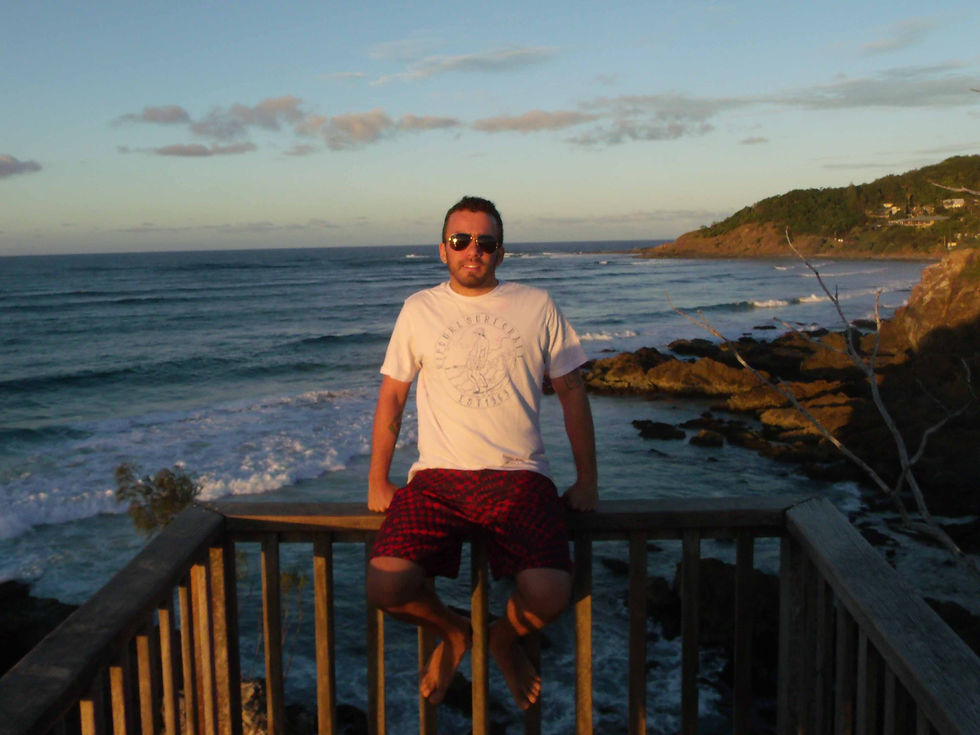
The first time I migrated to Australia, it was just me. No girlfriend. No wife. No real backup plan beyond "I'll figure it out" and whatever else fit into a suitcase. Plus a mildly concerning amount of optimism, which is what I now understand 25 year-olds use instead of a financial plan.
If you've ever moved countries, or even cities, you already know the truth most people don't tell you.
Migration isn't the flight over. The 50-odd hour journey from Brazil to Australia is the easiest part. The real process starts months — sometime years — in advance. Documents. Planning. Saving money. Immigration pathways. Career strategy. Emotional preparation. Trying to explain to my parents that "I'll visit often" isn't technically a lie, but also isn't the whole truth, and watching my mum nod the way mums do when they've already done the math.
Then comes the second mountain after we arrive. Finding work. Building friendships from scratch. Trying to create a sense of home in a place where even the supermarket feels somewhat hostile. Figuring out where we fit when nobody knows our history, our humour, or how smart we actually are underneath the weird accent.
People who've never migrated tend to underestimate how much of ourself gets left behind at the departure gate. We don't just move countries. We temporarily lose context.
I lasted about a year before returning to Rio. Not because Australia had "failed". Quite the opposite, actually. I could already feel there was something there for me. But I knew I needed to do it properly this time instead of improvising my entire life like a jazz musician who had one too many coffees and is now mid-panic-attack on stage.
So I spent the next eleven months back home sorting documents, understanding processes, building an actual strategy I could execute instead of vaguely hoping the universe would reward my courage.
Spoiler alert: the universe loves courage, but it also loves paperwork. GODDAMN IT!
And somewhere in those 11 months, the once friend-with-some-benefits became, officially, the girlfriend of my dreams. So by the time I boarded my flight back to Australia in October 2015, it was no longer just me, myself and I.
Now there was us. And "us" changes everything.
The Weight You Don't See Coming
There's something nobody really warns us about when we migrate with a partner. In many ways, it's infinitely better.
We have a teammate. Someone who understands us when everything else feels unfamiliar. Someone whose face feels psychologically stabilising after a hard day trying to decrypt a new life while scrubbing toilets, making beds and serving cocktails to people who tip in fist bump.
But there's a flip side. A heavier one: I took it upon myself to take care of her. Not in some outdated macho sense, as if she were incapable of navigating life herself. Far from it. But I wasn't just bringing my girlfriend with me. I was taking someone's daughter halfway across the world. A daughter who'd grown up with family in the next room, familiarity everywhere, support systems within walking distance. The kind of safety net most people don't fully appreciate until it disappears.
And suddenly, in this entirely new country, her safety net was basically me. A twenty-something on a student visa with a stubbornly optimistic attitude and a half-charged iPhone 5S. Cool. Solid foundation.
That hits differently in hindsight. At the time, in my mid-twenties, I mostly experienced migration as an adventure of a lifetime. Reinvention. Freedom. That intoxicating feeling that my entire future could still become almost anything.
Now, looking back, I can see the invisible weight underneath all of it. Because when we go alone, we're the only ones to smell the stink of our own mess. When we go with someone we love more than anything, every risk becomes shared. Every uncertainty reverbs louder. Every success tastes better because someone else suffered through the climb with us.
Going alone is brave. Going together is something else entirely. Heavier. Better. Scarier. Worth it.
December 2023: The Decision that was Made for us

Fast-forward almost ten years, and Thali and I made the call to return to Rio. At least temporarily. The reasons were the same ones most long-term migrants quietly wrestle with eventually:
I love where I chose to live. But I also deeply love the people I left behind.
So what do we do with that? Well, I don't think there's a universal answer. Anyone who claims to have one is selling a course.
Migration creates a strange emotional split-screen effect where part of our heart lives in one country while another part keeps operating in another timezone entirely. We build a life somewhere else, but our memories still speak with our peculiar accent of home.
One version of us misses the life we built. Another version misses the life that built us. And somewhere in the middle, we're trying to create a future without feeling like we're betraying either side. Eventually we realise there's a price attached to every choice.
Stay overseas long enough and we'll miss birthdays, aging parents, nieces and nephews growing up, inside jokes evolving without us, family brunches, funerals, random Tuesdays that would've mattered more than we realised at the time.
Go back home and we miss the version of ourself we grew to love overseas — the more competent, more confident, more autonomous person who got built brick by brick in a place that demanded all we got and then some.
That's the paradox. And honestly, I think a lot of migrants quietly carry some form of grief no matter which option they choose. We just don't talk about it much because grief about a privilege doesn't tend to get a lot of airtime.
The Quiet Repair: 29 Months in Rio and Counting...
A lot has happened during these last 29 months back in Rio. Some beautiful things. Some brutal.
We paid off debt from a business sale that went spectacularly pear-shaped. What was supposed to be a profitable transition turned into a financial and emotional disaster that drained us in ways I probably still don't fully understand.
If you've ever gone through business stress with the person you love most, you know how psychologically dangerous it gets. Nothing kills romance quite like spreadsheets, uncertainty, and trying to figure out whether our bank account is about to send us into cardiac arrest.
At one point it genuinely felt like we were drifting toward an emotional divorce while still technically remaining married. Which, by the way, is a special kind of hell — you're losing someone in slow motion while sitting next to them on the same couch.
So we came back home and quietly started rebuilding. No dramatic reinvention. No social media announcements. No "new era" captions over a sunset photo. Just silent, unsexy, daily work.
We rebuilt our savings. I started working in the family business. Thali and I repaired the parts of our relationship that the stress had hollowed out. I got real time with my aging parents — the kind we eventually realise is finite whether we emotionally accept it or not. I reconnected with extended family in a way that's almost impossible when we live on the other side of the planet.
And honestly? We needed support. Real support. Not motivational quotes disguised as wisdom. Not "mindset coaching". Not productivity optimisation. Support. Honest and real.
What we've received during this period was nothing short of miraculous. If there's one lesson buried inside these 29 months, it's probably this:
Sometimes the most strategic move is stop trying to optimise every second of our existence and just let ourselves heal properly.
Our nervous system eventually collects the debt our ambition created. One way or another, payment comes due, and the collector comes knocking. Usually at 3am. Usually with interest.
Why I'm Migrating to Australia Again at 40
Here's the strange thing about healing: once we actually do it, the world starts looking different.
Now that we've stabilised financially, rekindled our marriage, reconnected with family, and emotionally exhaled for the first time in years, the part of us that loved Australia started itching again. Getting louder. And eventually it became impossible to ignore.
So we've decided to go back.
But this isn't the same migration story as before. Back in 2014, I was chasing adventure. Now I'm chasing sustainability. Back then uncertainty felt exciting; now unnecessary chaos feels like a price I'm not willing to pay. Back then I could survive on adrenaline, extra-shot lattes, and good vibes. Now my body and mind file formal complaints in writing.
We're also approaching this move with completely different priorities. We're almost 40 and we're adding little humans to our family.
Long-term stability. Meaningful work. Financial flexibility. Community. Health. Life design at its finest. And, ideally, enough emotional maturity not to destroy ourselves chasing a life that looks impressive from the outside but feels hollow on the inside.
That last one would be nice. We're working on it.
The Strategy This Time Around
The good news is we're no longer starting from scratch. We became Australian citizens in 2019, which removes the biggest migration stressors entirely. No visas. No immigration uncertainty. No waking up at 2am wondering whether a government announcement is about to torch our life trajectory.
But even without visa pressure, this move still requires strategy. Probably more strategy than before, honestly. Because desperation is expensive. I learned that one the hard way, and the receipt is still pinned to my fridge.
This time we want to arrive in Australia with:
A solid income path from day one
Enough savings runway to stay flexible initially
Enough breathing room to avoid panic decisions
Enough stability to build properly, instead of merely surviving
That matters more in our late thirties than it did in our mid-twenties. Early in life, instability feels cinematically energising. Later on, it just feels tiring. Like, "I need to fix this, but I can't move" tiring.
The SMART Goal
So here's the current target:
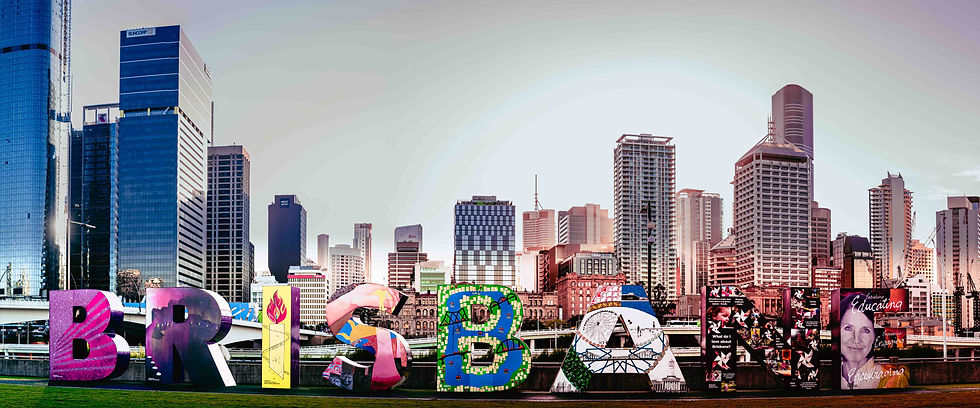
Find a corporate role in Sydney, Melbourne or Brisbane paying a minimum of $85,000/year, with some level of remote flexibility, by July 2027.
Simple. Clear. Measurable. And realistically achievable.
I've earned significantly more than that before. I'm better qualified academically and professionally now, and a hell of a lot more mature. I'm willing to begin immediately once relocation becomes viable.
But the income itself isn't really the deeper goal.
The deeper goal is building a life where we can spend meaningful chunks of time in both Brazil and Australia without constantly feeling emotionally or financially trapped in either country.
That's the actual long-term, 10-year goal. Not escaping the 9 to 5. Not pretending to be a digital nomad while answering Slack messages from a beanbag in Bali trying to look spiritually evolved for Instagram. Been there. Done that. Unsubscribed. I'm good now. Thanks.
Just...building a genuinely good life. A meaningful one. One with work that matters. People I love nearby. Enough dough to breathe and have fun. Enough freedom to think clearly. Enough perspective not to sacrifice my entire present chasing some imaginary future where I finally allow myself to relax.
If that sounds as boring as watch paint dry, congratulations — you're still in the chasing phase. Enjoy it. It's its own kind of fun.
What I'm Doing Here
The first time I migrated to Australia, the internet wasn't what it is now. The second time I was too busy grinding it out to document any of it. But this time feels different. Is different.
I want to share the process properly. The planning. The logistics. The budgeting. The career decisions. The emotional side of migration nobody talks about enough. The strange psychology of trying to leave one life while simultaneously building another.
I'm not doing this because I've got it all figured out. Quite the opposite. I'm documenting it precisely because I'm still figuring it out in real time, and pretending otherwise is exactly the kind of internet bullshit I'm trying to avoid.
So if you're navigating your own transition right now — a move, a career shift, a relationship rebuild, or just trying to become someone slightly more aligned with the life you actually want — I hope some part of this resonates.
And if not, at the very least, this might end up being a useful case study in how many spreadsheets a human being can open before having a spiritual meltdown.
We're just getting started.


Wow!! Your words made me emotional, not only because I got to live through it all with you, but especially because I feel so lucky to share my life with you. I can’t wait to see what the future holds for us in our beautiful Australia and to see how our journey continues to evolve.
Thank you for documenting it, I can’t wait to read it all! Te amo meu amor 💚💚💚