

Before Moving Back to Australia at 40, I Hired a Coach to Challenge My Bullshit: The Grounded-in-Reality Version

The Difference Between Dreaming Out Loud and Building Something That Holds
The extraordinary version was a beautiful and fun thing to write. Beautiful things to write are also exactly the kind of thing that can look slightly stupid on a Wednesday morning when you actually have to plan a life.

A few days after publishing it, I sat back down alone. No coach in the room. Just me, a laptop, and an inconvenient amount of free time, which is a dangerous combination for a man already prone to turning emotional discomfort into spreadsheets. I did the single most useful thing anyone can do before the next coaching session.
I broke my own dream. Moving back to Australia at 40 is a different kind of project than moving here at 25 was, and the grounded version is what happens when I stop pretending those two are in the same category.
Not cruelly. Not cynically. Not by laughing at it from the cheap seats like some bitter old man who gave up on everything in 2012 and now calls it maturity. I did the more sophisticated thing. I kept gently asking the dream version questions until it had to admit a few things about itself. Questions like: What does "I want to work somewhere that genuinely excites me" actually mean? Does it mean a vibe? A LinkedIn headline? A job ad I once saw at midnight and emotionally imprinted on like a duckling? Or does it mean: here's the exact shortlist of companies in Sydney that fit that description, here's who I know inside them, here's what those roles pay in year one versus year three, and here's what I'd have to give up to make any of it work? Because a dream without that second list is just a beautifully written cover letter for a job that doesn't exist.
I'd love to tell you I was devastated by this. The truth is, I came out lighter. Because dreaming without architecture isn't actually dreaming. It's an emotionally expensive form of hallucination that you have to keep funding with disappointment. And, frankly, I've been hallucinating professionally since about 2019.
You know that feeling when you finally let the contractor look at the house design you sketched on a serviette, and they say "Yeah mate, beautiful idea, but you can't put the load-bearing wall there"? That's what this work felt like, except the contractor was also me. And I was doing it sober at midnight. Mildly humiliating. Structurally necessary. And probably the only reason the building has any chance of going up.
A quick note on the coach, since she's about to do some quiet heavy lifting in this story and deserves a proper introduction. She's Brazilian. She's never set foot in Australia. She also happens to be making her own pivot, which means we're basically two people walking parallel tightropes and occasionally throwing each other ideas across the gap. We've worked together before. We get along in the way you only get along with people who can call you on your own crap without it becoming a diplomatic incident.
The way we operate is like the three branches of government on a good day. She legislates the questions. I execute the research and the actual life-building. And somewhere between us, usually halfway through a Zoom call when she catches me rationalising something with the confidence of a man one bad assumption away from financial ruin, sits the ethical check. The mutual veto power is the entire reason this exercise has a shot of working. So I sit down between sessions and do the grunt work she's about to inspect. Partly out of respect for her time, partly because coaching is expensive, and partly because, as a coach myself, I'm structurally incapable of letting a billable hour go to waste.
So, this is part two. The grounded-in-reality version. The part where we take the same dream and ask whether it can actually hold weight.
A quick caveat before we go, because I can hear already my imaginary 18-year-old son reading over my shoulder and thinking "Wow. Dad became a sellout before I was even born."
Grounded in reality doesn't mean smaller. I haven't downgraded the dream. I'm not here to tell you I've made peace with $85,000 a year and a job I quietly resent for fifteen years while calling it stability because the alternative requires courage and a functioning calendar. The extraordinary version still rules. It just now has to carry rent, support a family, fund a Master's degree, sustain a marriage, and not collapse the first time the Australian economy does something undignified, which it absolutely will. Aussies love an economic plot twist almost as much as they love a barbecue and an overconfident property opinion at dinner.
What's changed since the extraordinary version is mostly the level of detail. The direction hasn't moved. I still want to land in people and culture work. I still want a career that lets the engineer, the coach, and the eventually credentialed organisational psychologist all live in the same body without arguing in front of the kids. I still want a city that lets us actually live, not just exist off 6 triple-shot lattes a day and the delusion that walking past the ocean counts as rest. I still want a life I don't have to apologise to Thali for.
What's new is mostly the numbers. The extraordinary version landed on $150,000. The conservative version, the one I quietly carried around for years before this whole exercise started, was $85,000. After three weeks of actual research into the Australian market — salary bands, role titles, qualification pathways, registration requirements, and the strange way my engineering background, coaching experience, management work, and slightly-too-many accumulated credentials stack up against real hiring pages — the honest realistic starting point looks closer to $120,000. Not the dream number. Not the apologetic one either. The one that survives contact with a hiring manager.
And it asks a different question than the extraordinary version did. The extraordinary version asked: what would be absolutely extraordinary? The grounded version asks: what's the smallest set of decisions I can make right now that keeps the extraordinary version possible? Which is a much less romantic question. It's also the only question that matters once you've put the dream into words. Dreams are free. Designs cost. And designs that have to survive contact with reality cost even more, because reality has a long history of looking at your beautiful plans and saying "Cute. Now show me your savings, your study load, your work hours, your sleep schedule, and the look on your wife's face when you tell her we might be moving cities again."
I've spent the last three weeks working through that question on my own. We skipped our last fortnightly session because final exams at uni and projects at my engineering company needed me back in the room rather than floating around in my own head pretending thinking is the same as progress. So instead of fortnightly coaching, I had Claude in one tab, Joe in another — which is what I've started calling ChatGPT, because giving the robot a name makes it feel slightly less like I'm losing an argument with a calculator — and the kind of search history that makes my browser look like a man preparing for a parliamentary inquiry.
Master's programs. Registration pathways. Salary bands. Suburbs. School zones. Commute times. Cost of living. Public transport. Which Sydney neighbourhoods are vegan-friendly enough for us to feel human. Synagogues Thali might actually feel at home in. The difference between being a registered psychologist and an endorsed organisational psychologist, which is exactly the sort of bureaucratic distinction designed by people who believe clarity is a moral failing.
The result is what follows. Not a final plan, as these are a comforting fiction we tell ourselves to feel in control while the future quietly laughs into its sleeve. This is a working blueprint. Messy in places. More useful than pretty. Ready for the next session, where she'll either nod, ask the one question I was hoping she wouldn't ask, or quietly hand it back with red ink and the emotional restraint of a woman who's seen this movie before.
If the extraordinary version was the part where I dreamed without apology, this is the part where I engineer without flinching. It's slightly less fun to write. Probably less sexy to read. But it's significantly more useful to live by.
So let's go.
Career Design: The Bridge, With Load Tables and a Build Schedule
The extraordinary version closed on "that's not a job, that's a bridge." And I still believe that. I just now know what bridges actually cost.
The direction hasn't changed. I still want to land in people and culture work. Not the cupcake-and-policy-email version, where culture means sending a wellbeing survey once a quarter and pretending the beanbags are strategy. I mean the kind of P&C work that sits close to the business and treats culture as the thing that decides whether anything actually ships on time.
What's changed is that I now know the role I'm building toward, the city I probably need to do it in, the qualification stack I have to assemble, the time it'll take, and the version of my career history that actually closes the gap. None of which I'd figured out three weeks ago, when "people and culture" was less a plan and more a vibe wearing a job title.

So, let's start with the piece that genuinely surprised me.
This semester, I finished a postgrad in Workplace Health and Safety Engineering. I didn't take it as a CV thickener or as a sensible self-development badge with a graduation ceremony attached. I took it because I run an engineering company in Rio, and I was tired of outsourcing WHS policy work to consultants who, more often than not, handed back half-baked documents and hefty invoices. I wanted to own the operational and managerial side of my own business properly. Not because it sounded inspiring. Because I wanted more control.
What I didn't expect was for this unsexy business decision to become one of the most valuable assets on my CV. The reason is regulatory.
In 2022, SafeWork NSW published its Code of Practice for Managing Psychosocial Hazards at work. The national WHS Regulations followed in 2023. Long story short, Australian employers now have a legal duty to treat psychosocial hazards — high workload, role conflict, bullying, trauma exposure, all the human stuff previously brushed off as "culture" — with the same seriousness they apply to asbestos. Identify it. Assess it. Control it. Or enjoy a polite investigation from an inspector who's read more ISO standards than your average corporate law firm.
This created a hiring pull in a market that still doesn't fully know what to call the person it needs. The WHS people often have the regulatory grounding, but lack the behavioural depth. The P&C professionals usually have the human side covered, but not the WHS framework. I happen to sit across both. Add the engineering systems-thinking layer that comes from 16 years of staring at risk matrices for a living, and suddenly the weird career pile starts looking less like a mess and more like a product-market fit with mild burnout. The bridging international standard is ISO 45003, which I know well because the postgrad I just finished sits right in that territory.
I'd love to call this strategic brilliance. It is, in fact, the most lucrative accident of my professional life.
Then came Monday's coaching session, which sharpened the whole thing.
We started out with the assumption I'd been carrying for weeks: that corporate P&C and elite-athlete coaching were two separate worlds I'd run in parallel, one paying the bills, the other keeping my soul healthy. Forty minutes in, my coach asked a question I should've asked myself three weeks ago: "Why am I treating these as separate worlds when there's an entire category of company sitting exactly in the middle?" Sports organisations. Elite clubs. National sporting bodies. Sports tech. Performance institutes. High-performance consultancies. Every one of them is, structurally, a corporation, and runs on culture, leadership, talent pipelines, psychosocial risk, and the same organisational levers I'd be pulling at a bank. They just happen to do it inside an industry where I already speak the language.
That changed the target. Not a P&C role at any culture-forward Sydney corporate, but a P&C, Org Dev, or People & Performance role inside a sports-adjacent organisation specifically. The AFL. Rugby Australia. An A-League club. A franchise. A state institute. A high-performance consultancy serving multiple sporting bodies. The Australian Institute of Sport, even, if the right role opens up and the universe is feeling theatrical. Every single one of these organisations has a People function. Most of them have psychosocial risk obligations they're still figuring out how to meet. None of them are flooded with candidates who can speak engineering, coaching, psychology, and high performance fluently in the same conversation without sounding like a TED Talk trapped in a compliance audit.
That's what I'm now aiming at. The realistic starting number for that role, in Sydney, is roughly $120,000. Not $85,000. Not $150,000 either. The number where I'm not overselling, not underselling, and not relying on someone falling in love with me at interview to make up for a missing zero. With the right employer and the right pitch — engineer plus coach plus WHSE plus psychology honours plus years of private coaching practice — there's a credible path to $140-$150k in year one if I land somewhere that needs senior credibility from day one.
Then comes the part where the bridge stops being a metaphor and becomes a multi-year piece of structural engineering.
The Master of Organisational Psychology at Macquarie is the next professional anchor. It's the pathway that turns the whole thing from "experienced guy with useful overlap" into a regulated psychology career. After the Master, assuming the bureaucratic gods are appropriately fed, I can apply for general registration as a psychologist. Full stop, legal title.
To call myself an Organisational Psychologist specifically, the title that actually matters in consulting, assessment, and every room where people pretend titles don't matter until they absolutely do, there's another lap. The Registrar Program. 88 weeks, 3,000 hours of practice, 80 hours of one-on-one supervision with a Board-approved supervisor, 80 hours of CPD and a frankly offensive pile of invoices paid for the privilege of becoming more useful. Three evenings of reading just to map this thing inside my own head. A piece of bureaucratic origami, yes. But also 30 years of professional compound interest afterwards.
The rough timeline, working backwards: land in Sydney mid-2027, finish honours, take a serious P&C role, start the Master around 2028 or 2029, complete it around 2030, move into general registration five minutes later, grind through the registrar program, and arrive in 2034 as an Endorsed Organisational Psychologist. With the engineering background, the psych registration, the coaching practice, and presumably two or three small humans old enough to mock me for needing reading glasses.
The ceiling at that point isn't just a senior in-house role. It's Head of People & Performance at a national sporting body, the equivalent at an elite club, or the founder of a high-performance consultancy that does for sports organisations what Big 4 does for banks, minus the PowerPoint decks that look like they're built during a hostage situation.
And the small boutique coaching practice I'd keep on the side — five or six elite athletes a year — stops being a separate hobby and becomes a feedback loop. The athletes sharpen the organisational work. The organisational work funds and credentials the private practice. The two halves start compounding.

The extraordinary version called this a bridge. Three weeks of research, one coaching session, and a slightly worrying familiarity with Australian acronyms later, I'd call it something more useful: a road. With kilometre markers, a known destination, a few expensive tolls, and enough bureaucracy along the way to make me start believing in prayer.
Sydney: Where Moving Back to Australia at 40 Becomes a Spreadsheet of Suburbs
The extraordinary version left the city question open. Three love letters. No verdict. A hopeful man pretending optionality is the same as a decision. The grounded version closes it.
Sydney. Not because Brisbane and Melbourne stopped making sense. They still do. Individually, rationally, and in ways I keep having to explain to people who think "any of those would be fine" is helpful migration advice, rather than the emotional equivalent of handing someone a wet napkin during a house fire.
Brisbane is familiar. Melbourne is plausible. Sydney is the one. Annoyingly expensive. Logistically obnoxious. Emotionally appropriate.
The academic map helped. There are only five universities in the country offering a Master of Organisational Psychology, and four realistic east-coast options: Macquarie in Sydney, UQ and Griffith in Brisbane, and Deakin in Melbourne. The fifth's in WA, which is not, has never been, and with all due respect to sunsets and mining dollars, won't be an option.
So Sydney wins the first round for two reasons the extraordinary version was too busy taking selfies at the Opera House to notice. First, Macquarie's program is the most compatible with the life I'm actually trying to build: work, study, marriage, children, sleep, and the occasional meal that doesn't come in a wrapper and taste faintly of despair. Its evening and flexible study options matter because the dream isn't to become a full-time student at 40 while Thali carries reality around in a tote bag. Second, Sydney has the highest density of sport-adjacent corporate roles in the country. Clubs, codes, national bodies, performance institutes, sports tech, consultancies — the ecosystem's simply bigger there. If the career section is the road, Sydney is where the road has the most exits I actually want to take.
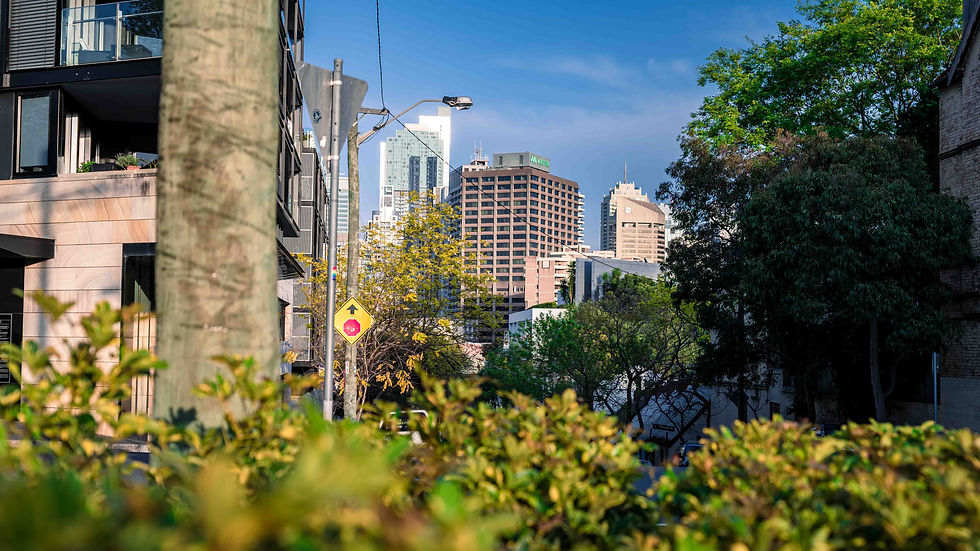
That doesn't make Sydney easy. It makes it hard in the right direction.
Brisbane and Melbourne stay alive, but under conditions so specific they're less "backup plans" and more emergency protocols written by a man who's watched enough of his own optimism try to start a cult. They activate only if three things happen at once: Macquarie says no twice, I get an offer from UQ, Griffith, or Deakin, and I find a full-time job in that city that supports the study load and pays properly. All three boxes. Two boxes means we stay in Sydney, keep building, and trying. Because nothing deprives a man of his sanity quite like sitting IELTS 9 times, and I have no desire to recreate that psychological hostage situation with postgrad admissions. The fallback isn't a backup plan. It's an escape hatch with three locks.
Within Sydney itself, the suburb question splits across two timelines.
Year one through three is the functional version. Working full-time and studying, the math is brutal: within 30-45 minutes of Macquarie campus by public transport, in a two-bedroom apartment around $700 to $800 a week, without having to sell a body part to a man in Double Bay called Lachlan. That puts the early search somewhere in the Macquarie Park, Epping, North Ryde, Chatswood, Lane Cove, Crows Nest, and St Leonards universe.
Chatswood is the logistical beast: transport, food, density, and enough people moving through it daily to make introversion feel like a medical condition. Crows Nest and St Leonards bring better food and a sense that life's still happening after 7pm. Lane Cove is the grown-up compromise: leafy, calmer, connected, and more likely to produce a rental that doesn't require us to eat lentils until Medicare sends sympathy cards.

Year four and beyond, once the Master's through and the registrar grind takes over, the rock n' roll turns into bossa nova. Coastal, walkable, within saltwater range of a sunrise that doesn't have to be earned through a 40-minute train ride and a therapy session on the way back. That's where the Eastern Suburbs and Northern Beaches come back into the frame. Coogee, Maroubra, Bronte, Bondi — the postcodes where Sydney's professional class trades internal organs for the right to complain about parking within walking distance of the ocean. Or Manly, Dee Why, Mona Vale — the slightly more horizontal version of the same dream, where everyone looks like they own a paddleboard, even if they're only going to Woolies. Both work. The choice comes down to where my eventual employer sits, where Thali finds her people, and which side of the harbour gives us the best shot at not turning the next move into another existential crisis.
Because that's the actual city question now. Not "where is the prettiest place?" but "where can the life hold its weight?" Sydney's the only answer where the university pathway, the sport-adjacent professional ecosystem, the lifestyle pull, and the future version of our family all point in roughly the same direction.
This is the version of the city question where romance and rent learn to share an apartment. They don't get along, but if we make the right choices, they might at least stop leaving passive-aggressive notes on the fridge.
Lifestyle: Marriage, Children, Belonging, and the Logistics of Loving People in Two Hemispheres
This is the section that matters more than the other two combined, which is annoying because it's the one I have the least control over.
You can engineer a career. You can spreadsheet a city. But you can't project-manage a marriage, a pregnancy, a child's emotional development, or the slow accumulation of a life that feels like it belongs to the people living it. You can only create the conditions and try not to screw them up. Which, unfortunately, is what adulthood keeps turning out to be.
Thali read the extraordinary version and lit up like someone who'd been waiting for permission to want the same thing. That's not a small data point. After three weeks of me doing research the way other men do fantasy football, the fact that she came back excited rather than overwhelmed told me the plan isn't just mine. It's ours. She's already mentally entering IKEA choosing furniture, which means the grounded version's job is to make sure the furniture actually fits.

So, the non-negotiables. The baby mission's locked in. Actively, optimistically, with the kind of mathematical attentiveness that only people in their late thirties or writing a PhD thesis bring to reproductive biology. The plan assumes we'll be parents by the time we land in Sydney, or close to it. That changes everything about the next twelve months. It's why "land a job that pays properly and supports a Master's degree" isn't a luxury. It's a structural floor. A baby doesn't care that dad's halfway through a postgrad. A baby cares that there's warmth, sleep, food and at least one parent in the room who hasn't dissociated into a Psychological Assessment and Evaluation lecture.
Then there's Thali's Jewish life. She's been playing on the reform side, not the orthodox one from the old days when dad's the hero of life and everyone else got assigned a supporting role. Sydney has options on both sides of the harbour: Emanuel Synagogue in Woollahra, North Shore Temple Emanuel in Chatswood. Wherever we land, there's a community for her to walk into.
That matters because it's hers, and I want her to have it. I'm not religious, I don't pretend to be, and our kids won't be going to religious schools. They'll go to good public ones, like normal kids whose parents believe in the public system and also in not paying forty grand a year for a primary education that includes Hebrew. But Thali having access to her community, on her terms, in a city where it's easy to find, is part of why Sydney works for both of us, not just for me.
The bigger logistical piece is Brazil. I'll still have a company there. Both sets of parents are there. They're not getting younger, our kids won't stay little, and the window for grandparents and grandkids to actually have relationships is shorter than anyone wants to admit.
So once the Master's done and the registrar grind's begun, the plan is one trip a year, at least a couple months at a time. Not a hurried two-week visit that ends with everyone crying at the airport because nobody had enough time to stop performing reunion and actually be together. A proper stay. Long enough that our parents are part of the kids' daily lives rather than characters they meet between flights. Long enough that cousins know each other and that neither of us has to apologise for living on the wrong continent, again.
That's not a holiday plan. That's a job criterion. Whatever role I land in 2027 has to either tolerate or actively support that pattern: real remote work, real flexibility, real "we trust you to do good work from another country for eight to twelve weeks a year" arrangements. Not the polite Australian version where "remote-friendly" means you can work from home on Fridays as long as you remain emotionally available in Slack. The actual kind. That narrows the employer list considerably, which is good. A plan that doesn't exclude anything isn't a plan, it's a panic attack with formatting.
Two to three months a year, every year, is the minimum dose to keep those relationships alive across an ocean. If the career plan doesn't enable that, the career plan has failed at the only metric that actually matters when I'm 70 looking back.
The marriage itself doesn't need a separate section, because the whole post is one. Eleven years in, two countries, a permanent residency marathon, IELTS nine times, three years in Biloela, a frozen meals business, financial collapse, the hardest season of our lives in Sydney, and somewhere underneath all of it the quiet absurd fact that we still pick each other every day. The plan exists to protect what's already there. Not to fix it. Not to stress test it. To give it room.
What I'm actually trying to build, once I strip out the salary bands, suburb shortlists, registrar timelines, and the deeply erotic language of public transport planning, is a life where Thali doesn't have to apologise for any part of herself, where our kids inherit a city rather than a series of moves, where I get to do work that uses every part of me without hollowing out the parts that aren't work, and where the four of us — five if the universe is generous — can sit at a kitchen table in a coastal Sydney suburb in 2034 and feel the strange, lucky weight of being exactly where we're meant to be.
That's not extraordinary. That's just home, designed. And honestly, after almost forty years, two migrations, and enough reinvention to make a LinkedIn profile look like witness protection, that might be the most extraordinary thing of all.


Comments